

A Complete Guide to Installing and Maintaining Quick Release Hooks (QRH) for Safe Berthing Operations
Inquire1. Key Installation Guidelines for Quick Release Hooks
1.1 Foundation and Preparation
Before installation:
· Ensure the foundation surface is level and structurally sound.
· Verify anchor bolt spacing, alignment, and verticality.
· Prepare certified lifting tools, as each QRH unit typically weighs 2–3 tons.
A solid and accurate foundation ensures long-term stability and reduces operational risks.
1.2 Lifting and Positioning
When lowering the equipment:
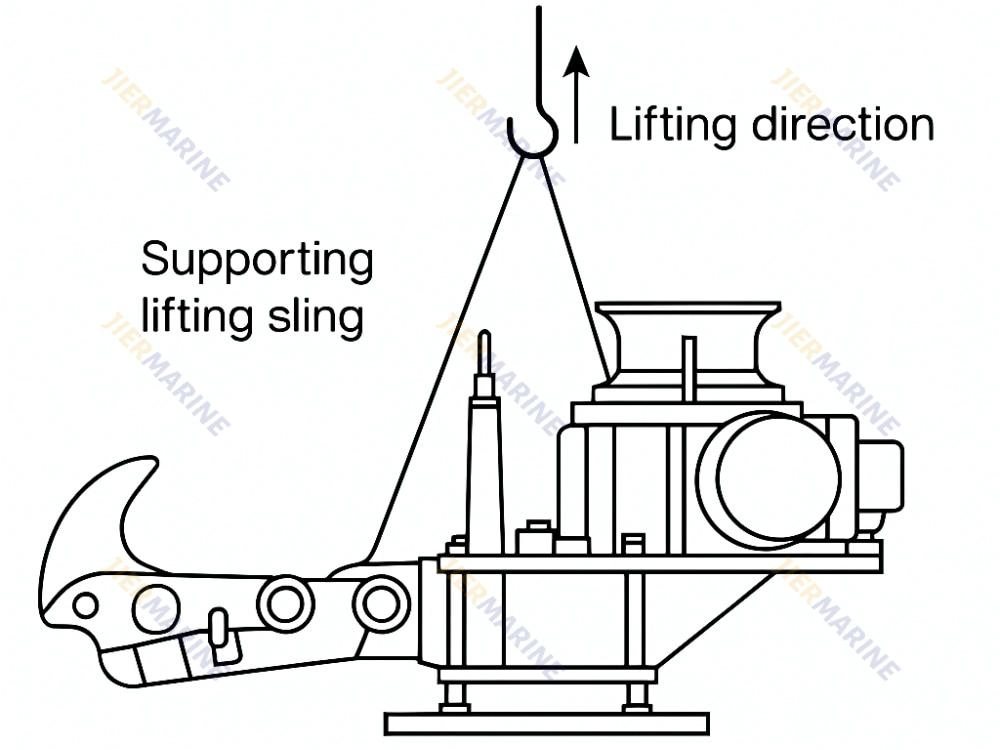
· Support the body using lifting slings through the hook base.
· Gently position the unit to align with embedded anchor bolts.
· Adjust the hook’s orientation toward the berthing direction for proper load distribution.
1.3 Electrical Control System Setup
For electric or intelligent QRH models:
· Mount the control cabinet at a convenient and safe location.
· Connect electrical power, control cables, and field switches according to wiring diagrams.
· Test motor forward/reverse rotation, emergency stop, and indicator lights.
A complete functional test must be performed after installation to ensure the release, reset, and rope-twisting mechanisms operate correctly.
2. Routine Inspection and Preventive Maintenance
Regular equipment checks minimize downtime and prevent unexpected failures.
2.1 Mechanical Component Inspection
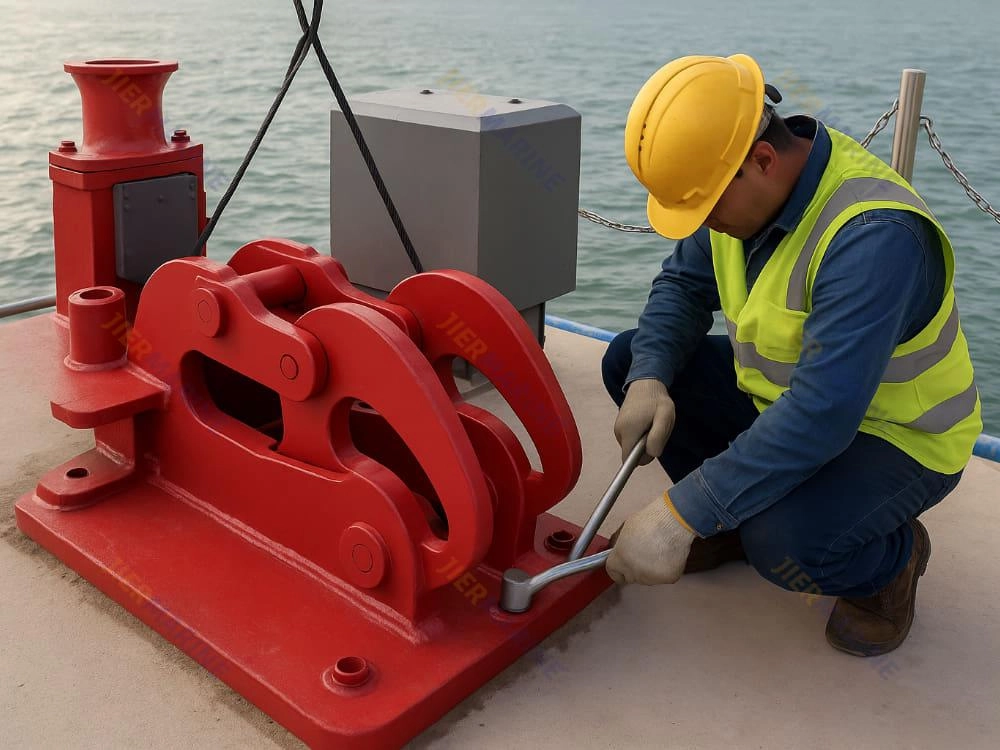
Operators should frequently check:
· Hook assembly for cracks, deformation, or wear.
· Pressure block and roller for smooth flipping action.
· Springs and pins for corrosion or fatigue.
· Anchor bolts for looseness or rust.
Any abnormality should be addressed immediately to maintain safe operation.
2.2 Electrical System Check
· Confirm stable power supply and functioning indicator lights.
· Test remote/local release operation.
· Inspect contactors and brake modules for overheating or improper movement.
3. Lubrication and Periodic Servicing
Proper lubrication significantly extends the life of QRH components.
Recommendations:
· Apply grease to all lubrication points monthly.
· Clean old grease before reapplying new lubricant.
· Avoid mixing incompatible grease types.
· Check gearbox oil levels for models equipped with rope-twisting winches.
4. Common Issues and Troubleshooting
4.1 Hook Fails to Lock
Possible causes: misaligned pressure block, weakened spring, or mechanical obstruction.
Solution: clean, lubricate, and replace worn components.
4.2 Motor Fails to Start
Possible causes: defective contactor, loose wiring, brake not released.
Solution: inspect electrical connections and control modules.
4.3 Rope-Twisting Speed is Slow
Possible causes: gearbox lubrication shortage or brake drag.
Solution: replenish lubricants and adjust the brake.
5. Conclusion
Quick Release Hooks play a crucial role in port safety and vessel-handling efficiency. A well-installed and properly maintained QRH system ensures smooth operations and minimizes safety risks.
By following standardized installation steps and adopting a structured maintenance schedule, operators can significantly enhance system reliability and extend equipment lifespan.
For customized QRH solutions—including electric release systems, intelligent tension monitoring, and remote-control functions—contact JIER MARINE for professional support.